

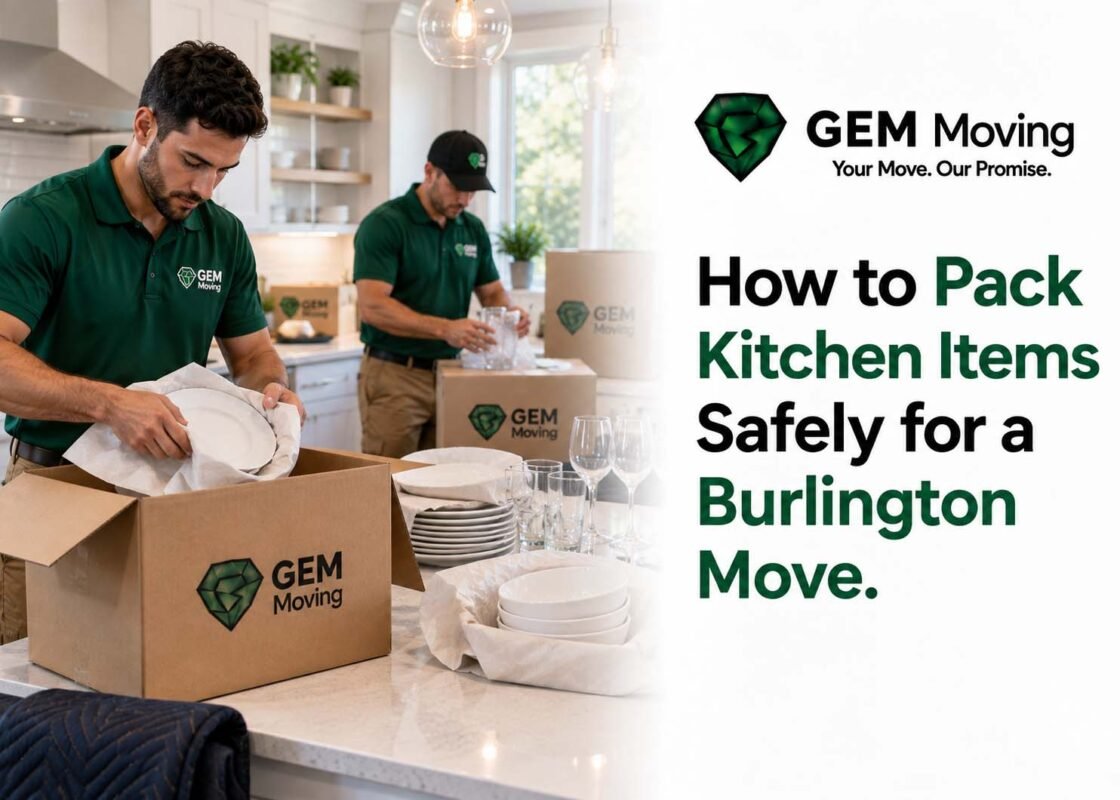
The kitchen is usually the last room packed and the first one people wish they’d started sooner. Dishes, glasses, small appliances, it adds up fast, and most of it is fragile.
TL;DR: Kitchen packing tips Burlington movers recommend start with sorting, since not everything needs to make the trip. Dishes and glassware need proper padding and upright packing to avoid breakage, while small appliances should be boxed separately from cookware. Large appliances need specific preparation before moving day. Moving kitchen items Burlington households handle themselves often takes longer than expected, which is why many turn to kitchen packing services for this room specifically.
Most rooms in a home pack in a straightforward way, clothes in boxes, books in boxes, done. Kitchens are different. Fragile items, mismatched shapes, and appliances that need disconnecting all slow the process down.
This guide breaks the kitchen into manageable sections, so nothing gets rushed or packed incorrectly.
Why Kitchens Take Longer to Pack Than Expected
A kitchen holds more fragile, oddly shaped items than almost any other room in the house. Plates, bowls, glasses, and small appliances all need individual attention rather than being tossed together into a single box.
Weight distribution matters too. A box packed with heavy items on top of lighter, fragile ones is a common cause of breakage that has nothing to do with how carefully something was wrapped. Getting the order right inside each box matters as much as the wrapping itself.
Because of this, kitchens often take significantly longer to pack than a bedroom or living room of similar size, which is worth planning for when scheduling your move.
Step 1: Sort Before You Pack
Before wrapping a single dish, go through the kitchen and decide what’s actually making the move. Expired pantry items, duplicate kitchen tools, and appliances that haven’t been used in years are worth setting aside rather than packing and unpacking for no reason.
This step also gives you a chance to identify what needs extra care versus what can be packed more casually. A set of everyday dishes might not need the same level of padding as inherited china or a wedding gift set.
Sorting first also reduces the total number of boxes needed, which matters if you’re working with residential movers Burlington companies who base part of their quote on volume.
Step 2: Pack Dishes and Glassware the Right Way
Dishes should be wrapped individually in packing paper and packed vertically, like records in a crate, rather than stacked flat. This distributes pressure more evenly and reduces the chance of cracking under weight.
Glassware needs extra padding, especially stemware. Wrap each piece separately, and consider using cell dividers inside the box to keep glasses from touching each other during transport.
Use small to medium boxes for dishes and glassware rather than large ones. A large box packed full of dishes becomes too heavy to lift safely, and the extra weight increases the risk of the box giving out at the bottom.
Step 3: Handle Small Appliances Separately
Toasters, blenders, coffee makers, and other countertop appliances should be packed separately from dishes, both for organization and protection. Remove any detachable parts, blades, pitchers, trays, and wrap them individually to prevent rattling or damage during transport.
If you still have the original box for an appliance, use it. Original packaging is built specifically for that item’s shape and weight, offering better protection than a generic moving box.
Label these boxes clearly, since small appliances are often needed early at the new home and having them easy to locate saves a frustrating search through unmarked boxes.
Step 4: Prepare Large Appliances for Moving Day
Refrigerators, stoves, and dishwashers need preparation before movers can safely transport them. Defrost and clean the refrigerator at least 24 hours in advance, and secure the doors so they don’t swing open during the move.
Gas appliances need to be disconnected properly, which sometimes requires a professional rather than doing it yourself. Confirm with your moving services Burlington provider whether they handle disconnection or if this needs to be arranged separately beforehand.
Empty and clean all large appliances fully, removing racks and shelves where possible and padding them separately to prevent shifting or damage during transport.
Step 5: Pack Pantry Items and Perishables
Non perishable pantry items, canned goods, sealed boxes, dry goods, pack easily into sturdy boxes without much special handling. Group similar items together to make unpacking faster at the new location.
Perishables and anything requiring refrigeration typically shouldn’t be packed for transport at all, especially for longer moves. Plan to use these up in the days leading up to the move or transport them separately in a cooler if the distance is short.
Liquids, oils, sauces, condiments, should be sealed tightly and packed upright, ideally in a separate box in case of leaks, to avoid damaging other kitchen items nearby.
What Kitchen Packing Services Typically Include
For anyone short on time or dealing with a particularly large kitchen, kitchen packing services handle the entire process, sorting guidance, wrapping fragile items, and boxing everything with proper labeling.
GEM Moving offers full and partial packing services, meaning you can choose to have the kitchen packed professionally while handling other rooms yourself, or vice versa. This flexibility works well for households where the kitchen is the most time consuming room to pack.
Professional packing also typically includes appropriate box sizes and padding materials already accounted for, removing the guesswork of buying the right supplies in advance.
FAQ
How many boxes does an average kitchen need for a move?
It varies widely by household size, but kitchens often need more boxes than expected due to the number of small, fragile items involved.
Should I pack dishes flat or on their side?
On their side, similar to how records are stored. This distributes pressure more evenly and reduces the risk of cracking.
Can movers help disconnect large appliances like a gas stove?
Some can, but gas disconnection often requires a professional. Confirm with your moving services Burlington provider ahead of time.
What’s the best way to pack knives safely?
Wrap each blade individually in thick paper or cardboard, then bundle several together with tape before boxing, clearly labeling the box as sharp items.
Is it worth hiring kitchen packing services instead of doing it myself?
If time is limited or the kitchen is large, professional packing often saves significant time and reduces the risk of breakage from rushed packing.
Final Thoughts
Kitchens take more time and care to pack than most rooms in the house, but sorting first and handling fragile items properly makes the process manageable. Large appliances just need a bit of preparation before moving day arrives.
GEM Moving offers kitchen packing services as part of full or partial packing options for Burlington moves, with a written quote confirmed before your move date. If packing feels like the biggest hurdle, get a free quote and see what fits your timeline.