

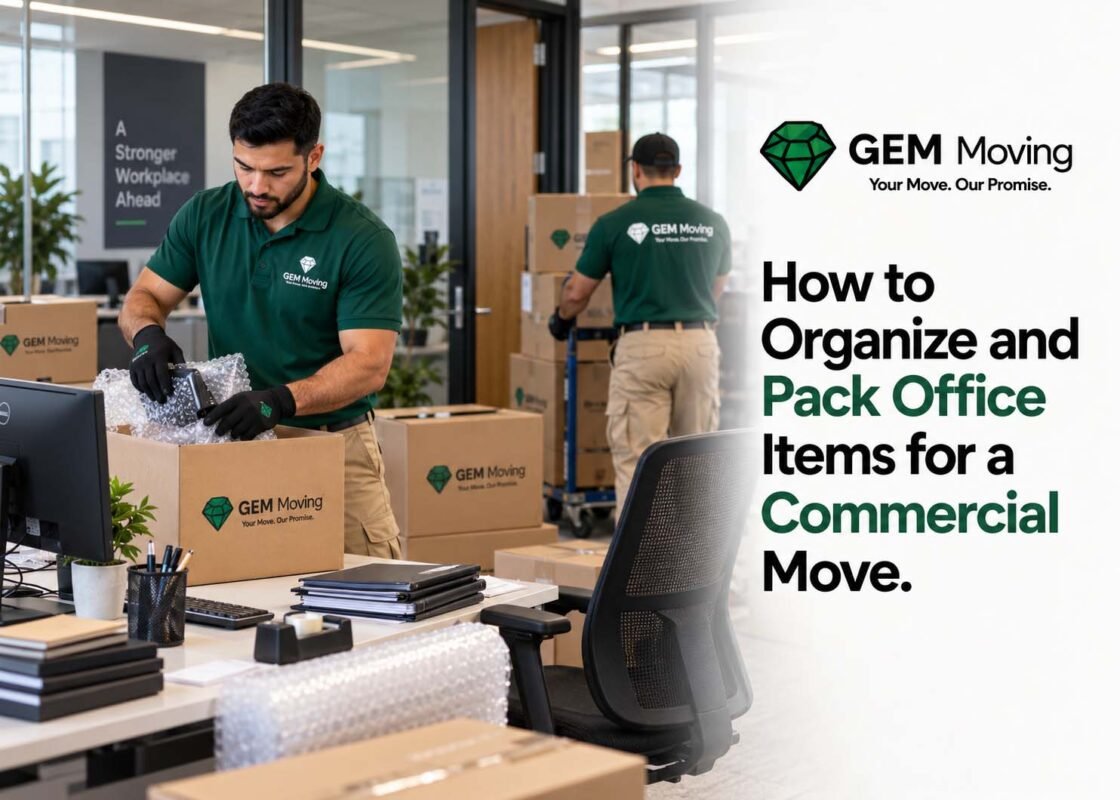
A home move disrupts one household. An office move disrupts a whole team’s ability to work, which means the packing plan matters just as much as the moving truck.
TL;DR: Commercial moving goes smoother when items are packed by department, not room, with electronics, cables, and files handled separately from general office items. Office moving services can manage the heavy lifting and transport, but a clear internal plan before moving day cuts down on lost time. Labeling clearly and packing sensitive items with extra care keeps the business running with minimal disruption.
Most office moves fail on organization, not effort. Boxes get packed without labels, cables get tangled together, and the first week at the new location turns into a scramble to find basic supplies.
This guide breaks the packing process into clear steps, so your team can get back to work fast once the move is done.
Why Office Moves Need More Planning Than Home Moves
A home move affects one family’s schedule. An office move affects every employee’s ability to do their job, and often client facing operations too. That difference changes how much planning needs to happen before moving day.
Shared equipment, printers, servers, conference room setups, adds complexity that a typical home doesn’t have. Multiple people also need to know where their individual items ended up, which means labeling needs to be more specific than a general home move.
Commercial moving also usually happens on a tighter schedule, since businesses want to minimize the number of working days lost to the transition.
Step 1: Inventory Before You Pack Anything
Before a single box gets packed, walk through the office and note what needs to move. This includes furniture, electronics, shared equipment, and anything stored in closets or supply rooms that might get forgotten.
An inventory also helps identify what shouldn’t move at all. Old equipment nobody uses, outdated furniture, or supplies past their useful life are worth sorting out before the move rather than paying to transport them.
Share this inventory with your commercial moving services provider in advance. It helps them plan truck size, crew size, and how much time the move will realistically take.
Step 2: Label by Department, Not Just Room
A box labeled “Office” tells the moving crew almost nothing useful. A box labeled “Accounting, Desk 3, Miscellaneous Supplies” tells them exactly where it belongs at the new location.
Color coding by department works well alongside written labels, especially for larger offices with multiple floors or sections. Assign one color per team or department, and use it consistently across all their boxes.
This system pays off most on unpacking day. Instead of every employee searching through a pile of identical boxes, each person can find their own items quickly based on color and label.
Step 3: Handle Electronics and Cables Separately
Computers, monitors, and shared equipment like printers or servers need their own packing approach. Cables should be labeled or bundled by device before disconnection, since untangling a box of unmarked cords wastes hours after the move.
Take photos of complex setups before disconnecting anything, particularly multi monitor stations or networked equipment. This gives whoever reassembles the setup a clear reference instead of guessing.
Sensitive electronics like servers often need anti static packing materials and should be transported upright, not laid flat. If your commercial move includes server equipment, mention this specifically when booking office moving services.
Step 4: Pack Files and Sensitive Documents Correctly
Paper files, contracts, employee records, and financial documents need careful handling, both for physical protection and confidentiality during the move.
Use sturdy file boxes rather than standard moving boxes, since files are heavier than most people expect and standard boxes can give out under the weight. Label boxes by category, HR, finance, client contracts, rather than a generic “documents” label that tells nobody anything useful.
For highly sensitive material, consider transporting it separately rather than including it with the general office move, particularly if confidentiality is a concern.
Step 5: Prepare Furniture and Shared Equipment
Desks, filing cabinets, and conference room furniture often need to be partially disassembled before a move. Note which pieces need to be broken down and keep hardware, screws, brackets, in labeled bags taped directly to the furniture piece they belong to.
Shared equipment like large printers, whiteboards, or reception furniture should be clearly marked as priority items if they’re needed immediately at the new location to keep the office functional on day one.
GEM Moving’s crews arrive with padded blankets and straps as standard practice, which protects furniture and equipment during loading and transport without requiring extra requests from you.
What Commercial Moving Services Typically Handle
A full service commercial move usually covers packing assistance, furniture disassembly and reassembly, loading and transport, and placement at the new location.
GEM Moving sends a written quote, not a rough estimate, based on the inventory and scope of the move. On moving day, the crew loads using padded blankets and straps, transports everything to the new address, and places furniture where it needs to go before removing packing debris.
Some businesses choose partial packing, handling their own desks and personal items while leaving furniture and heavy equipment to the movers. Either approach works, as long as it’s communicated clearly when booking.
Timing Your Move to Limit Downtime
Commercial moving dates fill quickly, especially around month end when many businesses schedule their moves. Booking early gives more flexibility on timing and crew availability.
Consider scheduling the move for a weekend or slower business period if your operations allow it, minimizing the number of working hours lost. If a full shutdown isn’t possible, a phased move, department by department, can keep some parts of the business running while others transition.
FAQ
How far in advance should we book a commercial move?
As early as possible, especially for month-end dates when commercial moving services see the highest demand.
Can movers handle server equipment and sensitive electronics?
Many can, but confirm this specifically when booking. Server equipment often needs particular handling and should be flagged in advance.
Should we pack our own desks or leave it to the movers?
Either works. Some businesses prefer packing personal items themselves while leaving furniture and heavy equipment to the professional crew.
How do we keep confidential files secure during the move?
Use sturdy file boxes labeled by category, and consider transporting highly sensitive material separately from the general office move.
Can a move happen without shutting down the whole office?
Sometimes, through a phased move by department. Discuss this option with your office moving services provider if a full shutdown isn’t practical.
Final Thoughts
A commercial move runs smoothly when the packing plan is as organized as the business itself. Labeling by department, separating sensitive items, and preparing shared equipment in advance all cut down on lost time once the move is done.
GEM Moving handles commercial moves with a written quote, trained crews, and careful loading from start to finish. If your business has a move coming up, request a free quote and get a plan in place before moving day.