
Rearranging a living room sounds like a quick Saturday task, until the couch won’t clear the doorway and someone’s already pulled a muscle trying to force it through.
TL;DR: Heavy furniture moving Toronto homeowners take on themselves often leads to strained backs or damaged walls, usually from poor technique rather than the furniture itself being unmanageable. Proper lifting form, the right equipment, and a clear path make most in-home moves manageable. Toronto’s tight condo layouts and narrow staircases add extra risk, which is why local furniture movers exist even for moves that don’t involve leaving the building.
Moving heavy furniture within your own home seems like it shouldn’t require much planning. In practice, it’s often where injuries happen, precisely because people assume it’s simple and skip the preparation they’d normally use for a full move.
This guide covers how to move heavy furniture safely on your own, and when it’s worth calling in help instead.
Why In-Home Furniture Moves Cause More Injuries Than People Expect
Full moves usually come with some mental preparation, you know it’s a big task and plan accordingly. Rearranging furniture within a home doesn’t carry the same weight, which often means less caution and worse technique.
Back injuries are the most common result, usually from lifting with the back instead of the legs, or attempting to move something too heavy without help. Damaged walls, doorframes, and flooring are the next most common issue, typically from trying to force furniture through a space that’s too tight without proper angling.
Heavy furniture moving Toronto residents handle themselves carries these same risks regardless of distance, whether it’s moving a dresser across the room or up a flight of stairs.
Preparing the Space Before You Move Anything
Before lifting anything, clear the path completely. Remove rugs, small furniture, and anything else that could become a tripping hazard while carrying a heavier item.
Measure both the furniture and the space it needs to pass through, doorways, hallway width, staircase turns. This takes a few minutes but prevents the common mistake of getting a piece halfway through a doorway only to realize it doesn’t fit at that angle.
Protect floors and walls in advance if the furniture will be dragged or angled through a tight space. Furniture sliders or moving blankets placed under legs prevent scratches on hardwood or tile floors during the process.
Proper Lifting Technique for Heavy Furniture
Lift with your legs, not your back. Bend at the knees, keep your back straight, and use your leg muscles to stand up while holding the item close to your body. This single adjustment prevents the majority of furniture related back injuries.
Never twist your body while carrying a heavy item. If you need to change direction, move your feet first rather than rotating your torso while holding weight.
For anything requiring two or more people, communicate clearly before lifting. Count together, confirm the direction of movement, and make sure both people are lifting and setting down at the same time to avoid one person bearing sudden, uneven weight.
Equipment That Makes Furniture Moving Safer
Furniture sliders. These go under the legs of heavy items, allowing them to glide across floors instead of being lifted and carried, which dramatically reduces strain and injury risk.
Moving straps. Shoulder or forearm straps distribute weight more evenly than gripping furniture with your hands alone, making heavier lifts more manageable for two people.
Dollies. A furniture dolly supports the full weight of an item while it’s rolled rather than carried, ideal for longer distances within a home.
Moving blankets. These protect both the furniture and your walls or doorframes from scratches and dents during transport through tight spaces.
Navigating Toronto’s Condos, Stairs, and Tight Hallways
Toronto’s condo buildings and older homes often come with layouts that weren’t designed with large furniture in mind, narrow hallways, tight stairwells, and sharp turns near entryways.
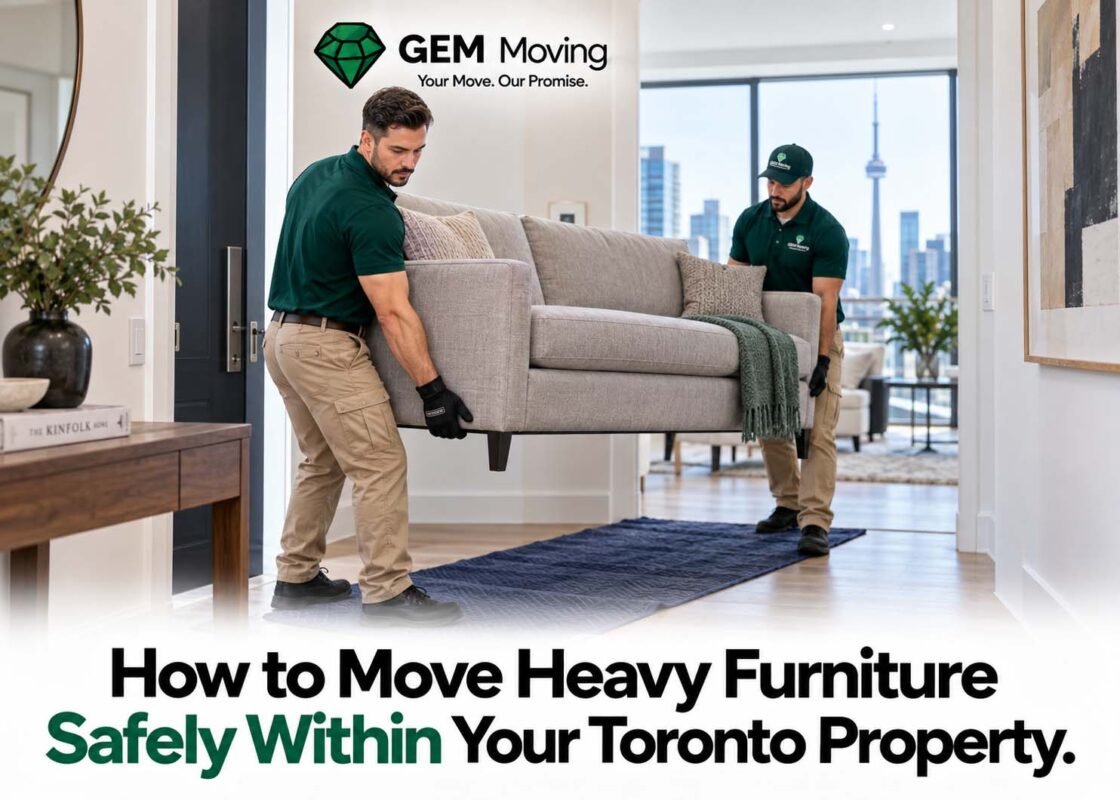
Furniture movers Toronto residents hire for these situations know how to angle larger pieces, sometimes tilting a couch vertically or removing legs and cushions temporarily to reduce its overall footprint through a tight space.
Elevator bookings matter too for condo moves, even within the same building. Confirm freight elevator availability if you’re moving furniture between floors, since standard passenger elevators often aren’t large enough for bigger pieces.
When to Call Professional Furniture Movers Instead
Some situations are worth handing off entirely rather than risking injury or damage. A piece that’s too heavy for two people, an unusually tight staircase, or furniture with high sentimental or monetary value all justify calling in professional help.
Furniture moving services aren’t limited to full household moves either. Many companies, including GEM Moving, offer in-home and in-building moving specifically for redecorating or renovation situations, where furniture needs to shift to another room or floor without leaving the property at all.
This service uses the same padded blankets, straps, and trained technique used in a full move, just applied to a smaller, in-home job.
Common Mistakes That Lead to Damage or Injury
Attempting a two person lift alone. This is one of the most common causes of back injury, often from underestimating how heavy a piece actually is.
Forcing furniture through a space that’s too tight. This leads to gouged walls, damaged doorframes, and sometimes damage to the furniture itself.
Skipping floor protection. Dragging furniture without sliders or blankets scratches hardwood and can crack tile in some cases.
Not measuring beforehand. Getting a piece stuck halfway through a doorway wastes time and often results in forcing it the rest of the way, causing damage.
FAQ
Can one person safely move a heavy dresser alone?
It’s not recommended for larger pieces. Even with sliders, having a second person helps guide the item and manage tight turns safely.
Do furniture movers help with moves that stay within the same building?
Yes. Many companies, including GEM Moving, offer in-home and in-building moving services specifically for this kind of job.
What’s the biggest risk when moving furniture up or down stairs?
Loss of control on an angled surface. Two people communicating clearly and moving slowly reduces this risk significantly.
Are furniture sliders worth buying for a one-time move?
Yes, they’re inexpensive and reduce injury risk substantially, especially for heavier pieces being moved across hard flooring.
When does it make sense to hire local furniture movers instead of doing it myself?
For anything unusually heavy, awkward staircases, or items with high value where damage or injury risk outweighs the cost of professional help.
Final Thoughts
Moving heavy furniture within your own home carries more risk than most people expect, but proper technique, the right equipment, and a bit of preparation prevent most common injuries and damage.
GEM Moving offers in-home and in-building moving services for exactly these situations, using the same careful handling as a full move. If a piece feels too heavy or the space too tight, get a free quote and let a trained crew handle it safely.