
Most people don’t think about storage until they’re standing in a garage full of boxes with nowhere left to put them. A renovation drags on longer than planned, a new home isn’t ready yet, or a downsize leaves you with furniture you’re not ready to part with. Whatever the reason, the question is always the same. Where does this stuff go, and how do you make sure it comes back in the same condition it left in?
We looked at how storage is typically sold in Brampton before writing this. Most of it is self storage: you rent a unit, you load it yourself, and you’re on your own for wrapping, stacking, and figuring out what fits where. That works for some situations. It’s not the only option, and it’s often not the safest one for furniture that actually matters to you.
TL;DR
- Climate control matters more than most people realize, especially for wood furniture and electronics
- Wrapping and padding before storage prevents scratches, warping, and mildew
- Full-service storage, where movers pack and load for you, reduces handling damage compared to DIY self storage
- Short term and long term storage need different preparation, particularly around climate and packing materials
- Insurance coverage varies a lot between storage providers, so it’s worth confirming before you sign anything
Table of Contents
- Why Storage Damage Happens More Than People Expect
- Climate Control: The Detail Most People Skip
- Self Storage vs. Full-Service Storage
- How to Prepare Furniture Before It Goes Into Storage
- Short Term vs. Long Term Storage Needs
- What to Ask About Insurance
- Choosing a Storage Provider in Brampton
Why Storage Damage Happens More Than People Expect
Furniture doesn’t need to fall over to get damaged in storage. Wood swells and cracks in humid conditions. Fabric absorbs moisture and starts to smell. Metal frames rust if a unit isn’t properly sealed. None of this shows up right away, which is exactly why people are surprised months later when they pull items out of storage and find damage they never saw coming.
Most damage traces back to two things: poor climate control and rushed handling during load-in. Both are fixable, but only if you know to look for them before you commit to a storage provider.
Climate Control: The Detail Most People Skip
A lot of storage facilities in Brampton advertise climate controlled units, and there’s a good reason for that. Temperature swings and humidity are the biggest threats to wood furniture, leather, electronics, and musical instruments sitting in storage for weeks or months at a time.
Standard storage without climate control can work fine for plastic bins or metal items, but wood furniture and household appliances are a different story. If you’re storing a dresser, a dining table, or anything with real wood veneer, ask specifically whether the unit is heated and cooled year round, not just insulated.
Self Storage vs. Full-Service Storage
Self storage means you rent the space and handle everything else. You load the unit, you wrap the furniture, and you stack boxes however fits. It’s often the cheaper option upfront, but it puts all the physical work and the risk of improper handling on you.
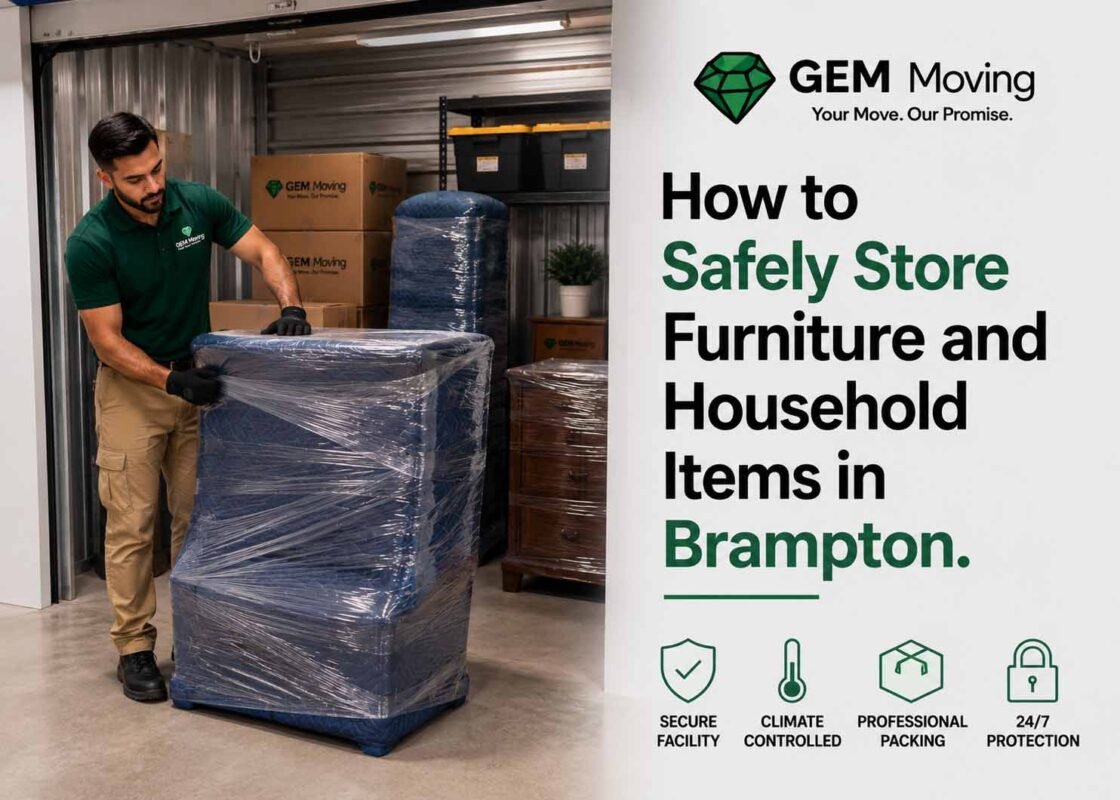
Full-service furniture storage services in Brampton work differently. A moving crew wraps, pads, and loads your items using the same equipment and technique they’d use for a full relocation. That means furniture gets protected properly before it ever touches a storage unit, and you’re not the one straining your back trying to fit a couch through a narrow storage door.
How to Prepare Furniture Before It Goes Into Storage
Wood furniture should be wrapped in moving blankets or padded covers, not left bare against metal shelving or other furniture. Upholstered pieces benefit from breathable covers rather than plastic, since plastic traps moisture and can lead to mildew over time.
Disassemble what you can. Bed frames, table legs, and large shelving units take up less space and are less likely to get damaged when broken down before storage rather than moved in one piece. Label every box clearly, the same way you would for a full move, so you’re not opening ten boxes looking for one item six months from now.
Short Term vs. Long Term Storage Needs
Short term storage, usually a few weeks to a couple of months during a renovation or a gap between homes, has more flexibility. Basic wrapping and a clean, dry unit are usually enough to keep items in good shape over that window.
Long term storage needs more care. Climate control becomes non-negotiable at that point, and it’s worth checking the unit periodically if your provider allows access, just to confirm everything’s holding up the way it should. Household item storage in Brampton that’s expected to last six months or longer deserves this extra attention.
What to Ask About Insurance
Storage insurance varies a lot between providers, and the coverage amount isn’t always obvious until you dig into the fine print. Some facilities include a set coverage amount by default, while others require you to purchase additional protection separately.
Ask what’s covered, what isn’t, and whether the policy accounts for the actual value of what you’re storing. If you’re storing higher value furniture or appliances, a low default coverage limit might not be enough to make you whole if something does go wrong.
Choosing a Storage Provider in Brampton
Look past the unit size chart and ask about the details that actually protect your belongings. Is the facility climate controlled? Is it monitored with security cameras? Does the provider offer help with loading, or are you on your own for that part?
Our storage services combine secure, monitored space with the same careful handling our moving crews use on every job, so your furniture gets treated the same whether it’s headed to a new address or into storage for a few months.
Frequently Asked Questions
Is climate controlled storage worth the extra cost?
For wood furniture, electronics, and anything sensitive to temperature or humidity, yes. It significantly reduces the risk of warping, cracking, or mildew over time.
How long can furniture safely stay in storage?
With proper climate control and preparation, furniture can stay in storage indefinitely. Without climate control, extended storage increases the risk of damage over several months or longer.
Do I need to pack items myself before storage, or can movers do it?
Full-service storage providers typically handle packing and loading for you, using the same wrapping and padding techniques used during a regular move.
What’s the difference between short term and long term storage pricing?
Short term storage is usually priced by the week or month with more flexibility. Long term arrangements sometimes offer a lower monthly rate in exchange for a set commitment period.
Is my furniture insured while it’s in storage?
Most storage providers offer some default coverage, but the amount varies. It’s worth confirming the coverage limit and asking whether additional insurance is available for higher value items.
Ready to Store Your Belongings the Right Way?
Whether you need a few weeks of space during a renovation or long term storage between moves, G.E.M Moving handles your furniture with the same care as a full relocation. Get a free quote and we’ll walk through what storage option fits your timeline.