

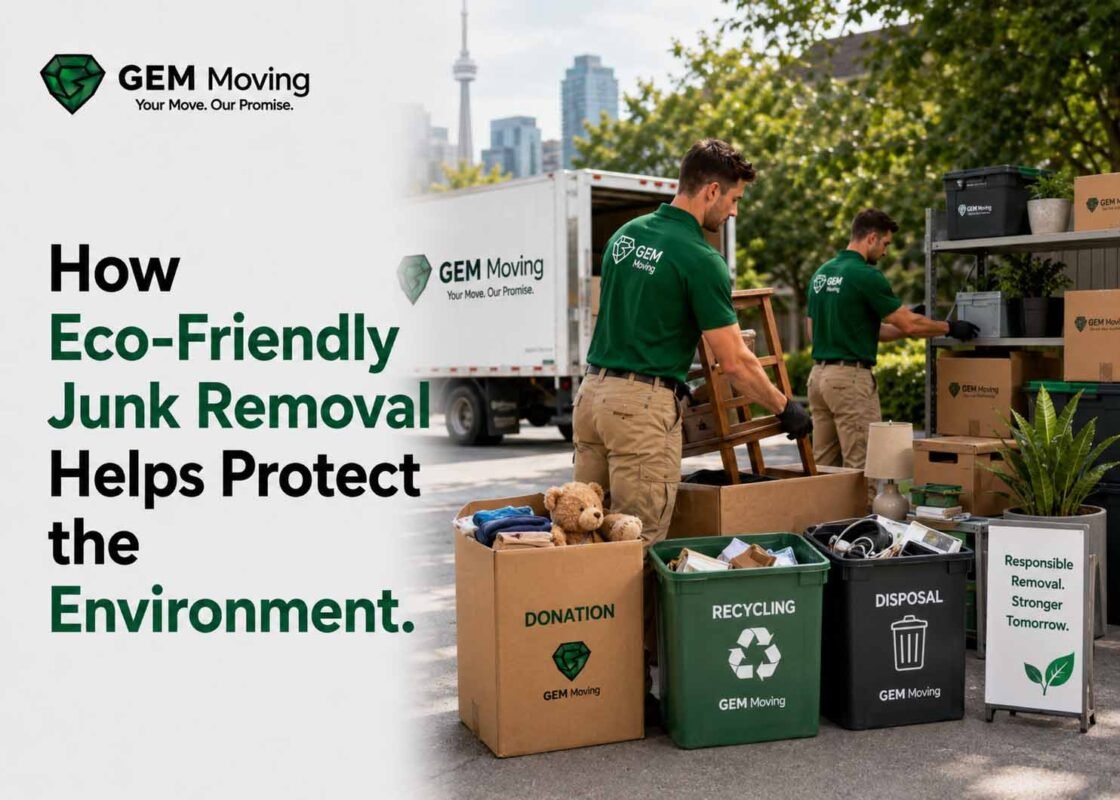
Clearing a basement, office, garage, or renovation site often produces more waste than expected. Old furniture, electronics, appliances, cardboard, metal, wood, and general rubbish can quickly fill a truck.
Putting everything into one load and sending it to landfill may seem convenient. It also wastes items and materials that could still be reused or recycled.
Eco-friendly junk removal takes a more careful approach. Items are sorted by condition and material so reusable goods, recyclable materials, hazardous waste, and general rubbish can follow the right disposal path.
TL;DR
Eco-friendly junk removal keeps usable and recyclable materials out of landfill whenever suitable options are available. The process separates items for donation, recycling, specialized disposal, or final waste removal instead of treating everything as garbage.
Key Takeaways
- Reusable furniture, appliances, and household goods may be donated.
- Metal, cardboard, electronics, and some renovation materials may be recyclable.
- Batteries, chemicals, and hazardous materials require separate handling.
- Sorting before pickup makes responsible disposal easier.
- Businesses can use junk removal to clear space without sending every item to landfill.
- A responsible company should explain what it accepts and how different materials are handled.
- Not every item can be donated or recycled, but proper sorting can reduce unnecessary waste.
Table of Contents
- What Is Eco-Friendly Junk Removal?
- How Green Junk Removal Reduces Landfill Waste
- How Donation Extends the Life of Usable Items
- Why Recycling Different Materials Matters
- How Hazardous and Electronic Waste Should Be Handled
- How Homes and Businesses Can Prepare for Pickup
- How to Choose an Eco-Conscious Junk Removal Company
- Frequently Asked Questions
What Is Eco-Friendly Junk Removal?
Eco-friendly junk removal is the collection and removal of unwanted items with an effort to reuse, donate, recycle, or dispose of each material through a suitable channel.
A standard cleanout may place furniture, cardboard, appliances, electronics, and general waste into the same load. A more responsible process separates those materials before final disposal.
The basic order should be:
- Reuse items that still serve a purpose
- Donate goods that remain in usable condition
- Recycle accepted materials
- Send restricted items to appropriate facilities
- Dispose of remaining waste correctly
This approach follows the broader goal of a circular economy, where products and materials stay in use instead of being discarded immediately. Ontario’s waste strategy prioritizes reducing, reusing, recycling, and reintegrating materials into the economy.
An environmentally responsible service does not claim that every item can be saved. Broken, contaminated, unsafe, or heavily damaged materials may still need to be discarded.
The difference is that disposal is not treated as the first and only option.
G.E.M Moving’s junk removal service handles residential clutter, office items, furniture, appliances, electronics, renovation debris, yard waste, and property cleanouts. The company states that reusable items are donated and accepted materials are recycled whenever possible.
How Does Green Junk Removal Reduce Landfill Waste?
Landfills receive many items that could have remained in use or entered a recycling stream.
A table, filing cabinet, shelving unit, or working appliance may no longer suit one property. That does not always mean the item has reached the end of its useful life.
Green junk removal starts by identifying what can be separated from general waste.
Common categories include:
- Reusable furniture
- Working appliances
- Electronics
- Scrap metal
- Cardboard
- Wood
- Clothing and textiles
- Renovation materials
- Yard waste
- General household rubbish
Sorting matters because mixed loads are harder to reuse or recycle. Clean cardboard has a better chance of being accepted when it is not covered in paint, food, or other waste.
Metal should be separated from bags of general rubbish. Electronics should not be hidden inside boxes of household waste.
The City of Toronto encourages waste reduction through sharing, repair, reuse, and donation. Its programs aim to keep reusable materials out of landfill.
Why Landfill Diversion Matters
Every item sent for reuse or recycling is one less item placed into the general waste stream.
Recycling can also recover materials that can be used again. Metal furniture, appliances, cardboard, and some building materials may contain useful resources.
The result depends on local acceptance rules and the item’s condition. Painted wood, mixed construction material, damaged furniture, and contaminated cardboard may not qualify for recycling.
A responsible junk removal company should never promise that an entire load will be diverted. It should assess the contents and separate what can reasonably follow another route.
How Does Donation Extend the Life of Usable Items?
Donation is often the most direct option for goods that remain safe, clean, and functional.
An office may replace all its desks during a renovation even though several are still usable. A family may remove a sofa because it does not fit the new home. A landlord may clear appliances after a tenant leaves.
These items may still have value to another person or organization.
Products commonly considered for donation include:
- Tables and chairs
- Desks
- Shelving
- Filing cabinets
- Sofas in suitable condition
- Working appliances
- Kitchenware
- Clothing
- Toys
- Books
- Tools
- Household accessories
Donation centres have their own rules. They may reject damaged upholstery, stained mattresses, recalled products, incomplete furniture, or appliances that cannot be tested.
Call ahead before assuming an organization will accept an item.
The City of Toronto recommends donating goods in suitable condition and supports programs that help residents reuse, share, repair, and exchange materials.
Inspect Items Before Pickup
Separate donation candidates from obvious waste.
Check that each item is:
- Clean
- Complete
- Safe to use
- Free from pests
- Structurally sound
- Not subject to a product recall
- Suitable for transportation
Empty all drawers, cabinets, and pockets. Remove personal records, medication, cash, jewellery, keys, and photographs.
Do not label a broken item as reusable simply to avoid disposal charges. Donation organizations then have to spend their own time and money removing it.
Sustainable junk removal works only when items are sorted honestly.
Why Is Recycling an Important Part of Sustainable Junk Removal?
Recycling gives accepted materials a chance to be processed and used again.
Different materials require different facilities. A cardboard recycler cannot handle a refrigerator, and an electronics collection program may not accept renovation debris.
Professional sorting can divide the load into practical groups.
Metal
Metal bed frames, shelving, filing cabinets, tools, and appliance components may be suitable for scrap metal recovery.
Remove non-metal attachments when possible. Tell the removal company if an item contains fuel, oil, refrigerant, or another restricted substance.
Cardboard and Paper
Clean, dry cardboard can often be recycled. Flatten boxes to reduce the space they take inside the truck.
Paper records may require secure shredding rather than standard recycling. Businesses should protect customer, employee, and financial information.
Electronics
Computers, televisions, monitors, printers, cables, and other electronic products should follow an approved electronics collection or recycling process.
Toronto advises residents not to place unwanted electronics in the Blue Bin or general garbage. Electronics can be collected separately or taken to approved drop-off options so they can be recycled and kept out of landfill. Batteries must be removed and handled separately.
Before removing a computer or phone:
- Back up important data
- Sign out of accounts
- Remove storage cards
- Delete personal information
- Complete a secure data wipe
- Remove detachable batteries where required
Businesses should follow their information security policies before releasing any device.
Renovation Materials
Wood, metal, cabinets, doors, fixtures, and other renovation materials may be reusable or recyclable depending on their condition and local facility rules.
Toronto advises residents to take construction and renovation waste to a suitable drop-off facility or hire a private disposal company. Materials that remain usable may be suitable for donation.
Keep drywall, wood, tiles, metal, and general waste separated where possible. Mixed piles take longer to sort and may limit recycling options.
How Should Hazardous and Electronic Waste Be Handled?
Some items should never be placed into a standard junk load without first discussing them with the removal company.
Restricted materials may include:
- Paint
- Solvents
- Fuel
- Propane cylinders
- Pesticides
- Motor oil
- Cleaning chemicals
- Fluorescent bulbs
- Batteries
- Medical waste
- Pressurized containers
- Unknown liquids
These products can create fire, leakage, contamination, and worker safety risks.
Store hazardous materials in their original containers where possible. Keep labels visible and do not mix different chemicals.
Tell the company about these products before pickup. The crew may not be licensed or equipped to transport them.
Toronto’s Community Environment Days accept certain reusable, recyclable, electronic, and household hazardous materials for appropriate handling. The program is designed to keep suitable waste out of landfill and support safer disposal.
Use the City of Toronto’s Waste Wizard or your municipality’s disposal guide when you are unsure where an item belongs. Acceptance rules can differ by city and may change over time.
Never Hide Restricted Materials
Do not place chemicals or batteries inside sealed boxes without telling the crew.
A leaking container can damage other items, the truck, and the property. It may also expose workers to substances they were not prepared to handle.
Clear information protects everyone involved.
How Does Environmentally Friendly Junk Removal Help Businesses?
Commercial cleanouts can produce large volumes of material at once.
An office renovation may remove desks, chairs, computers, cabinets, carpet, and packaging. A retailer may need to clear displays, shelving, stock, and cardboard. A property manager may need to clean an apartment after a tenant leaves.
Environmentally friendly junk removal helps businesses separate useful assets from waste before the property is cleared.
Office Cleanouts
Create four groups:
- Items moving to the new office
- Items going into storage
- Items suitable for donation or resale
- Items requiring recycling or disposal
Wipe company data from electronics and remove confidential papers from filing cabinets.
Retail and Warehouse Cleanouts
Separate saleable stock, damaged stock, metal fixtures, shelving, pallets, cardboard, and general waste.
Maintain records if the business needs to document inventory disposal.
Renovation Projects
Schedule removal at different stages instead of allowing materials to form one mixed pile.
For example, remove old office furniture before demolition begins. Once furniture is mixed with drywall dust and broken construction material, reuse becomes less likely.
Property Management
Inspect abandoned furniture, appliances, electronics, and personal items before removal.
Follow lease terms and legal requirements before disposing of a tenant’s property. The junk removal crew should not be expected to decide who owns an item.
G.E.M Moving provides office and commercial cleanouts with removal of furniture, equipment, files, and general business junk. Its service also covers renovation debris, storage units, garages, basements, and complete property cleanouts.
How Can You Prepare for Eco-Conscious Junk Removal?
Preparation helps the crew work faster and makes sorting easier.
Create Separate Groups
Place similar materials together where possible:
- Donation items
- Electronics
- Appliances
- Metal
- Cardboard
- Renovation material
- General waste
- Restricted items requiring another service
Use signs or labels if several people are helping with the cleanout.
Remove Personal Items
Open drawers, bags, boxes, and cabinets before pickup.
Check for:
- Identification
- Financial records
- Family photographs
- Keys
- Medication
- Jewellery
- Cash
- Electronic storage devices
Once an item has been loaded and removed, recovery may not be possible.
Clear the Access Route
Remove obstacles from hallways, stairs, driveways, and entrances.
Tell the company about elevators, limited parking, narrow doors, basement access, and large items before the appointment.
Send Photos for a Better Quote
Photographs help the company estimate volume, labour, truck space, and the types of materials involved.
Show the entire pile rather than sending close-up pictures of only a few items.
Identify Heavy or Difficult Items
Mention:
- Refrigerators
- Washers and dryers
- Pianos
- Hot tubs
- Safes
- Large cabinets
- Exercise equipment
- Construction debris
G.E.M Moving bases junk removal pricing on factors such as the amount and type of junk, labour, accessibility, and disposal requirements. The company handles lifting, loading, hauling, and cleanup after removal.
How Do You Choose an Eco-Conscious Junk Removal Company?
Environmental language should be supported by a clear process.
Ask each company:
- Do you separate reusable and recyclable items?
- What types of items do you donate?
- Which materials can you recycle?
- How do you handle electronics?
- Do you accept renovation debris?
- Which hazardous materials are prohibited?
- Where are non-recyclable items taken?
- Is labour included in the quote?
- Do you remove items from inside the property?
- Are you insured?
- What could increase the final price?
A company should explain that recycling and donation depend on condition, local rules, and facility acceptance.
Be cautious of absolute claims such as “everything is recycled.” Some materials cannot be recycled because they are contaminated, damaged, mixed, or not accepted locally.
An honest provider will tell you what it can take and which items need another disposal method.
G.E.M Moving provides upfront pricing after reviewing the amount and type of junk. The crew removes items from their location, handles the lifting and loading, and sorts goods for donation, recycling, or responsible disposal whenever possible.
Frequently Asked Questions
What items can eco-friendly junk removal companies take?
Many services accept furniture, mattresses, appliances, electronics, boxes, office items, yard waste, renovation debris, and general household clutter. Acceptance depends on the company, local regulations, item condition, and available disposal facilities.
Does all collected junk get recycled?
No. Reusable and recyclable items may be diverted, but damaged, contaminated, or non-recyclable waste may still go to landfill. Ask the company how it sorts each type of material.
Can working furniture and appliances be donated?
They may be donated if they are clean, safe, functional, and accepted by a local organization. Donation centres can refuse items because of condition, safety concerns, space, or current demand.
Can junk removal companies take paint and chemicals?
Many standard junk removal services do not accept hazardous products. Paint, fuel, solvents, pesticides, batteries, and similar items may require a municipal hazardous waste program or another approved facility.
How is green junk removal priced?
Pricing commonly depends on the volume and type of material, labour, carrying distance, access, disposal requirements, and heavy items. Send clear photographs and a complete item list before booking.
Clear Your Space Without Treating Everything as Waste
A cleanout does not need to send every item to the same destination. Sorting allows usable goods to be donated, recyclable materials to be recovered, and restricted products to receive proper handling.
G.E.M Moving provides eco-conscious junk removal for homes, offices, renovation sites, garages, basements, storage units, and commercial properties. The crew handles lifting, loading, hauling, and cleanup while donating and recycling suitable items whenever possible.
Share the item types, approximate volume, pickup location, access details, and preferred date when you request a free junk removal quote.